A soggy yard and a damp basement corner usually share one cause: water with nowhere to go except toward your foundation. We trace where it’s coming from, then give it somewhere better to go.
We'll call to set a time. If it can't wait, call (816) 857-9277
Something went wrong sending your request. Please call (816) 857-9277 and we'll take the details over the phone. Your answers are still filled in below if you'd rather try again.
Where rain goes on a typical Kansas City lot, and what stops it reaching the basement.
Swipe to follow the water across the yard.
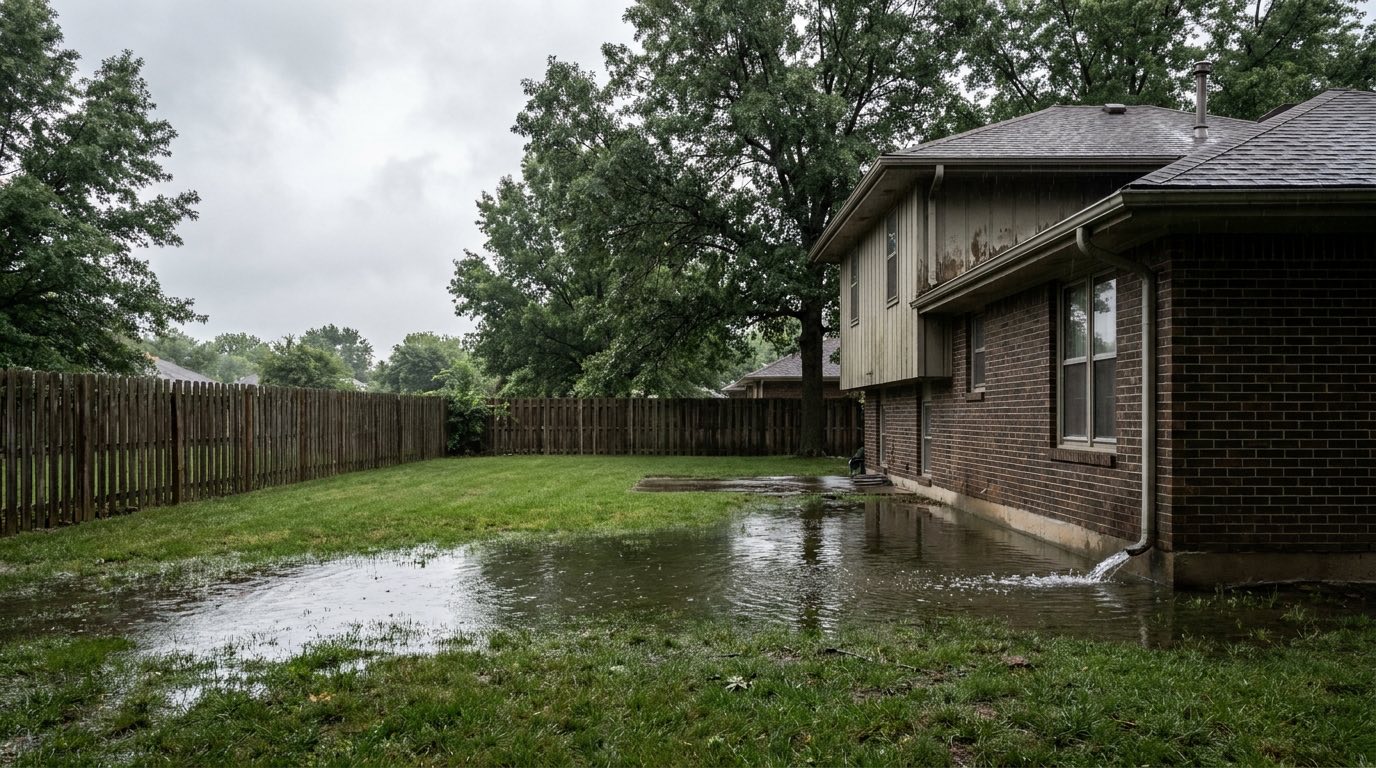
A whole roof’s worth of rain lands in one spot, right against the foundation.
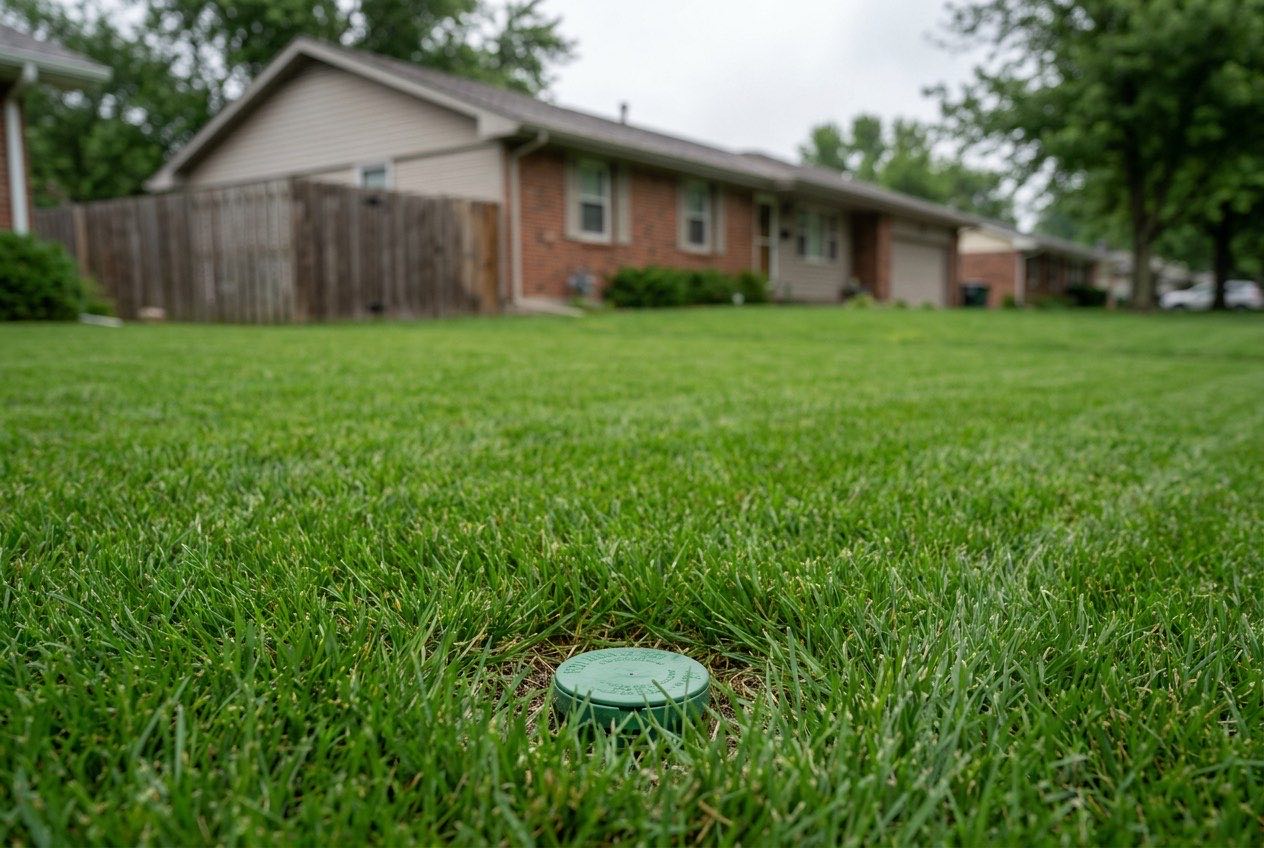
Buried downspout line carries it underground to a pop-up emitter well out in the yard.
Surface water runs back to the foundation and pools in the low spot.
Regrade so the soil falls away from the house for the first several feet.
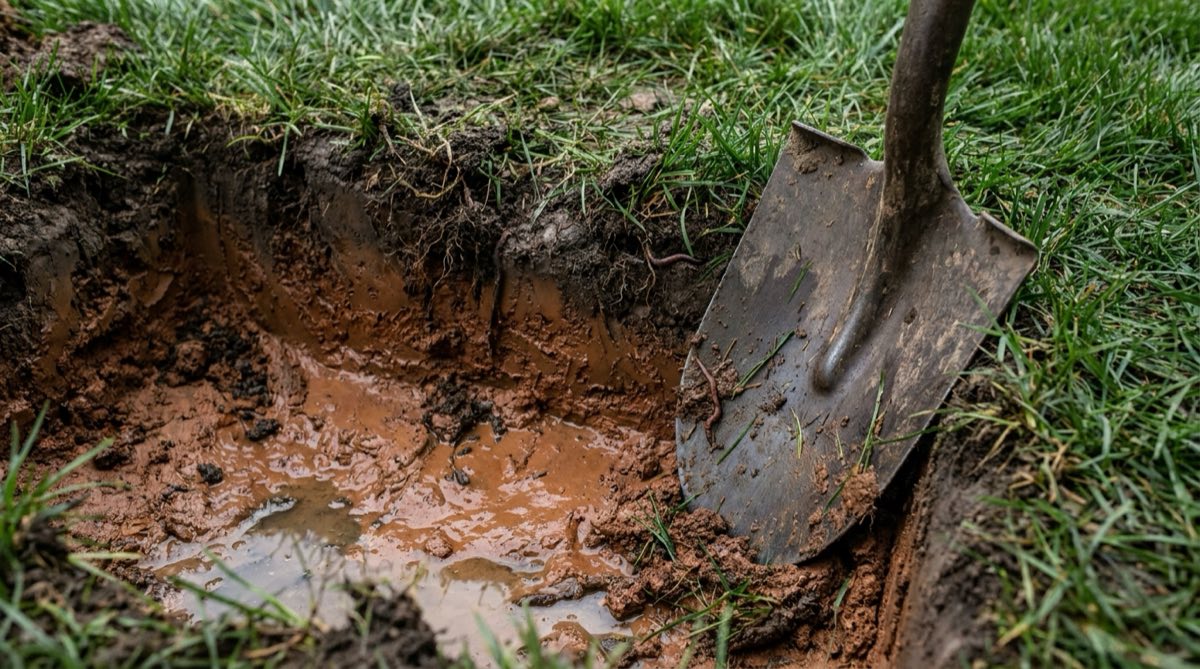
Clay drains slowly, so water sits in the ground and pushes sideways on the wall.
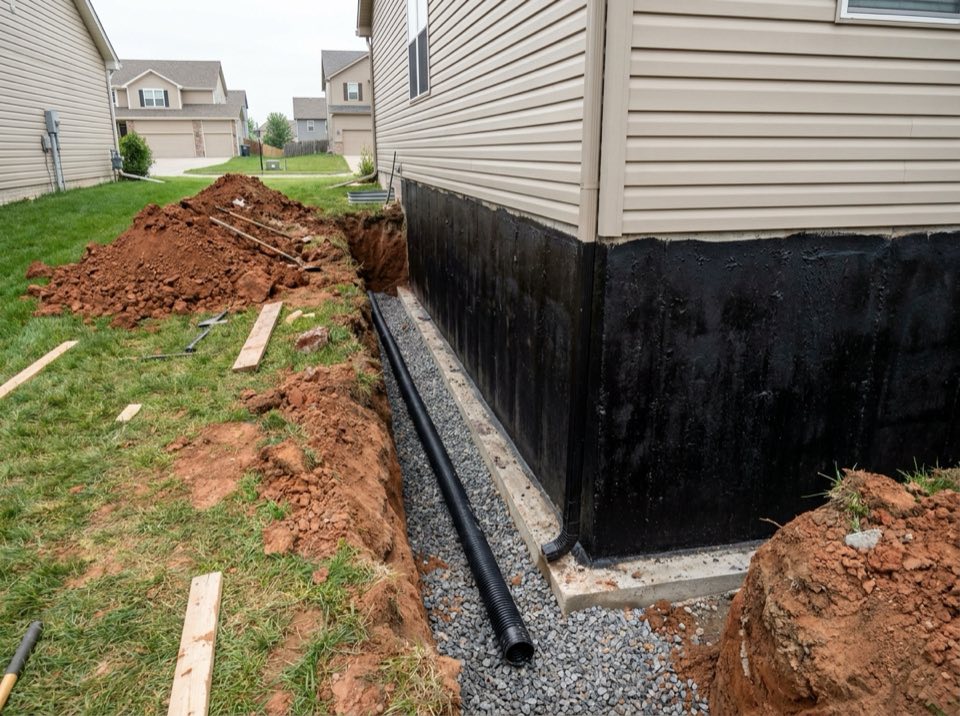
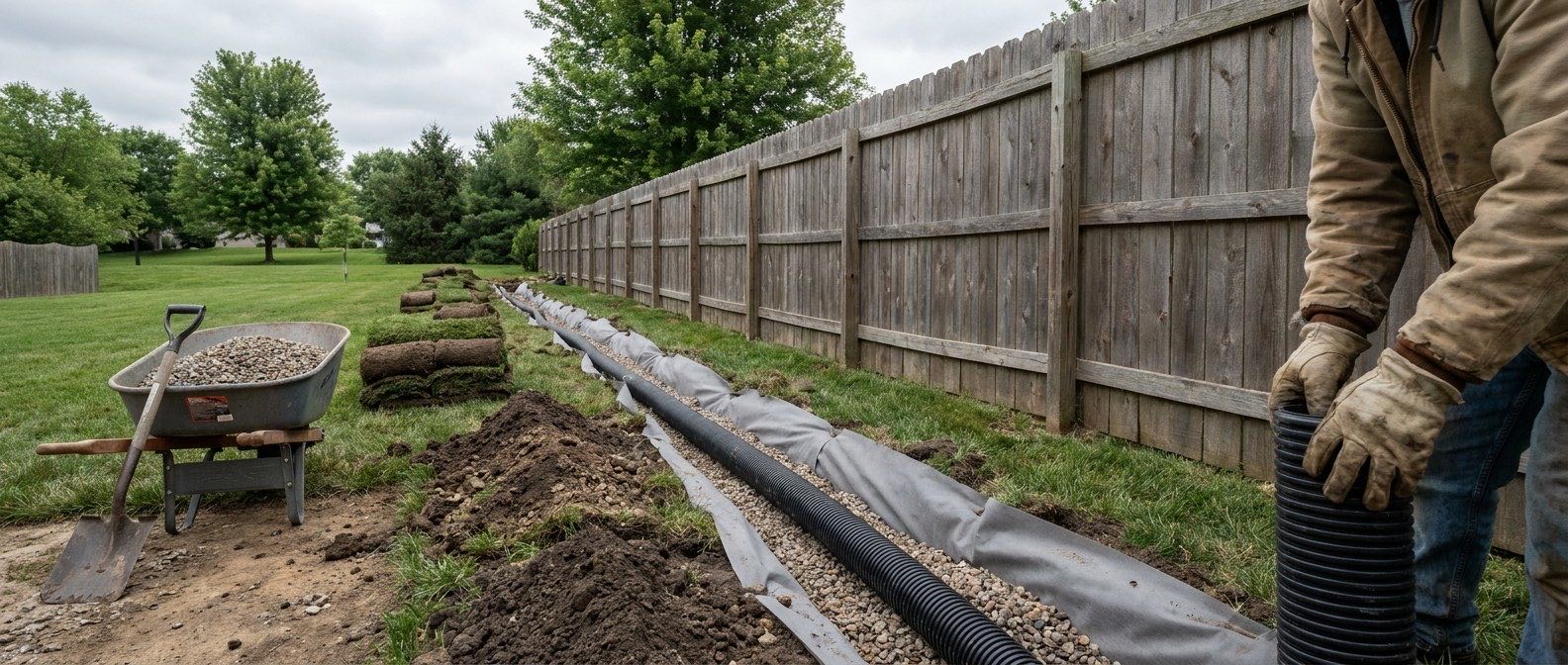
A French drain gives it a gravel path and a pipe to a safe outlet.
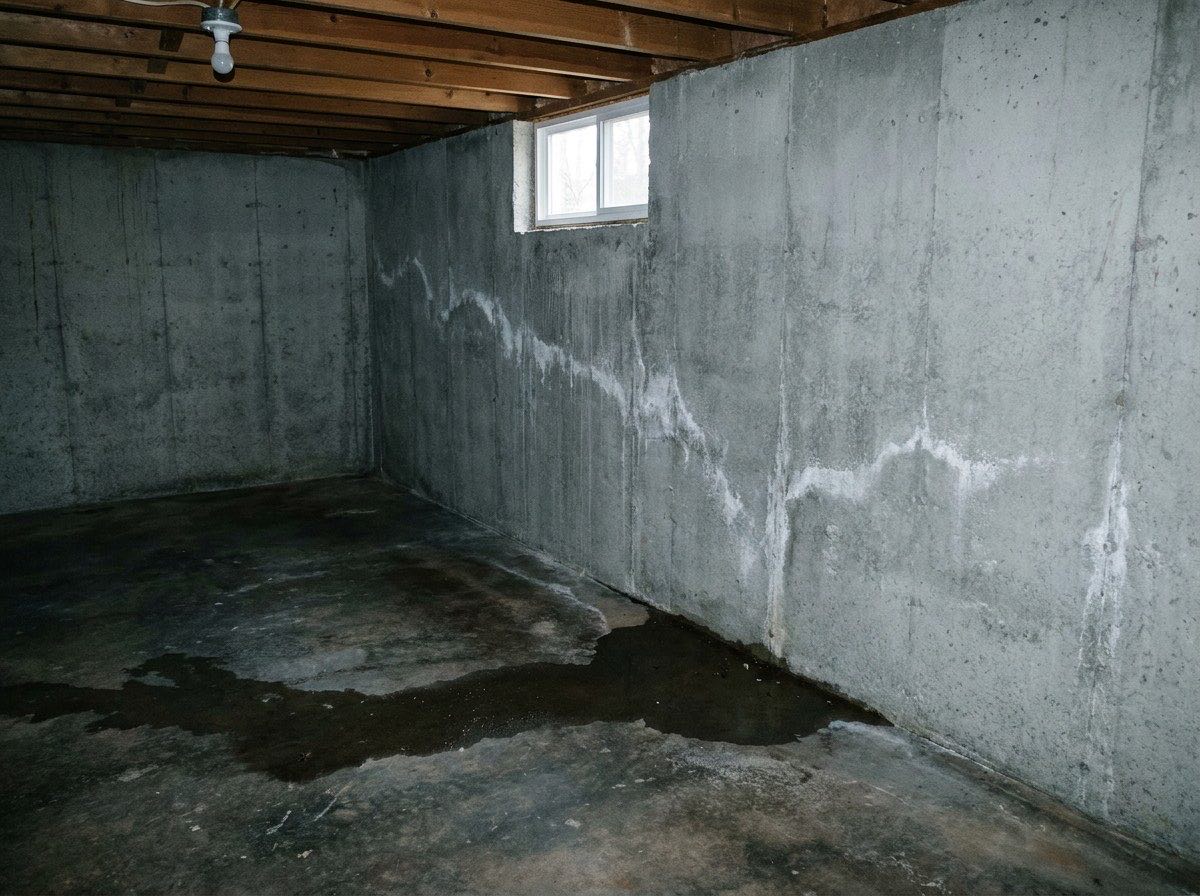
Pressure forces water through the joint at the bottom of the basement wall.
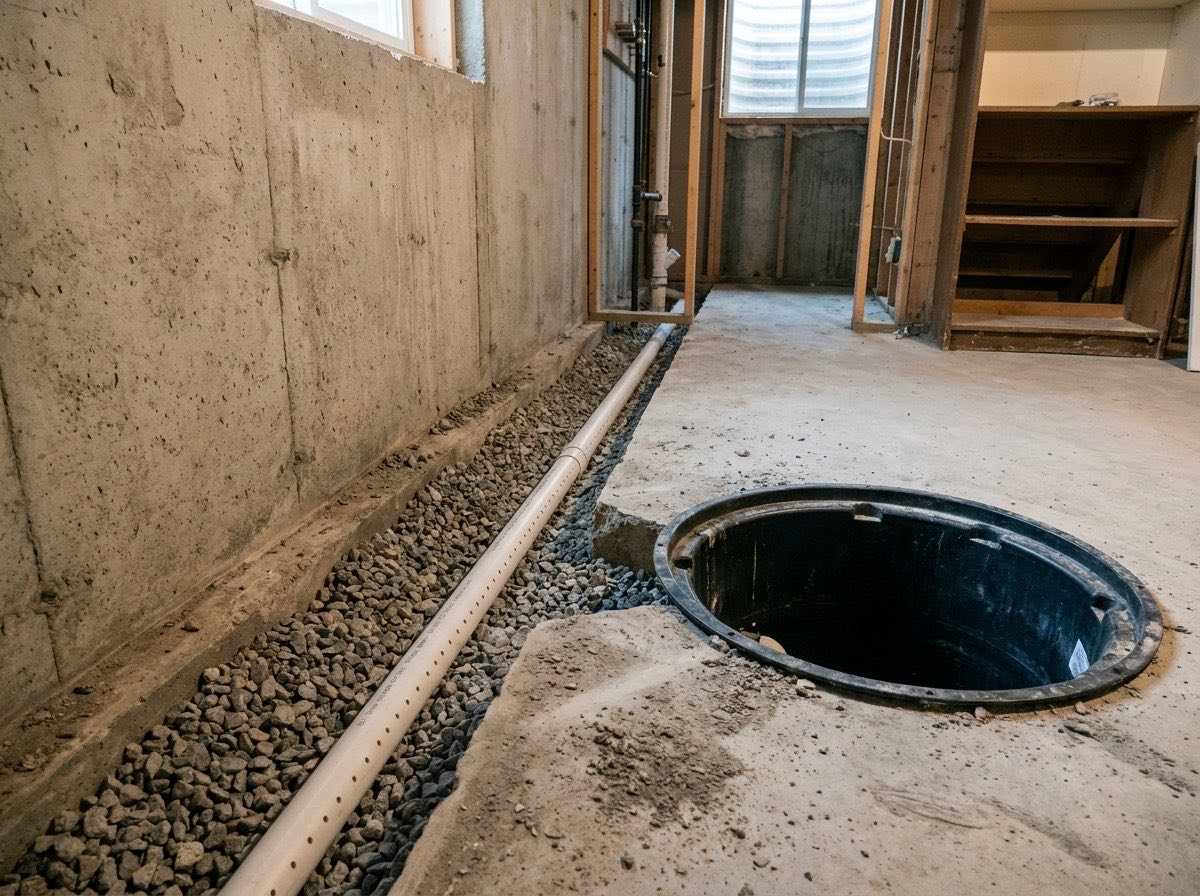
Interior drain tile collects it under the floor edge and a sump pumps it out.
Most people call us describing a symptom, not a product. Here’s what each one usually points to.
“A strip of lawn that never dries out”
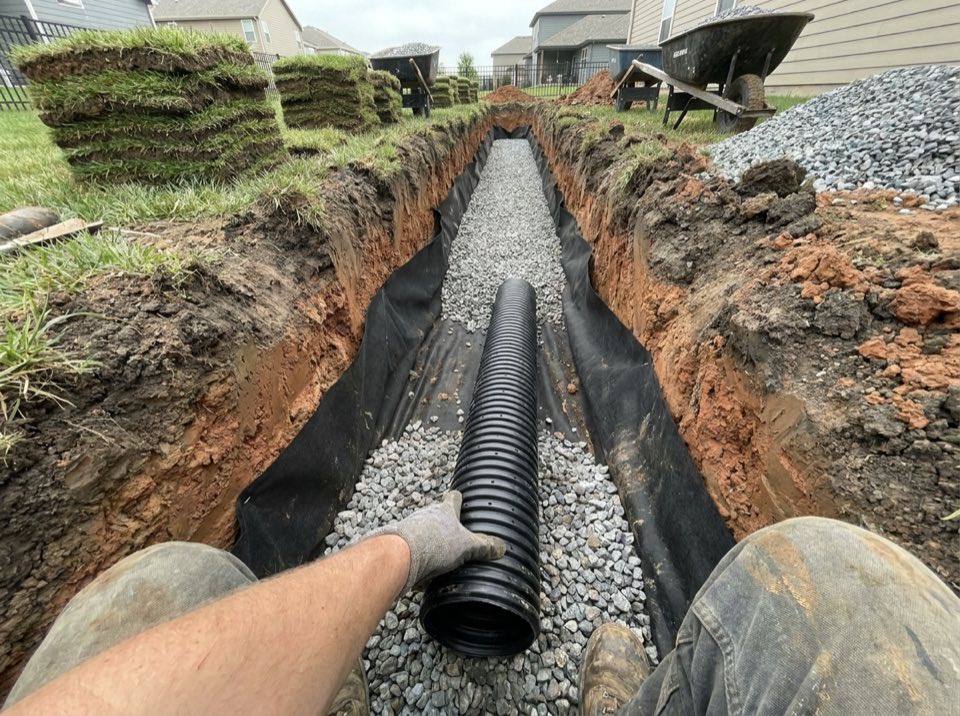
A gravel trench and perforated pipe that collect water sitting in the ground and carry it to a safe outlet.
French drains
“Puddles against the house after every storm”
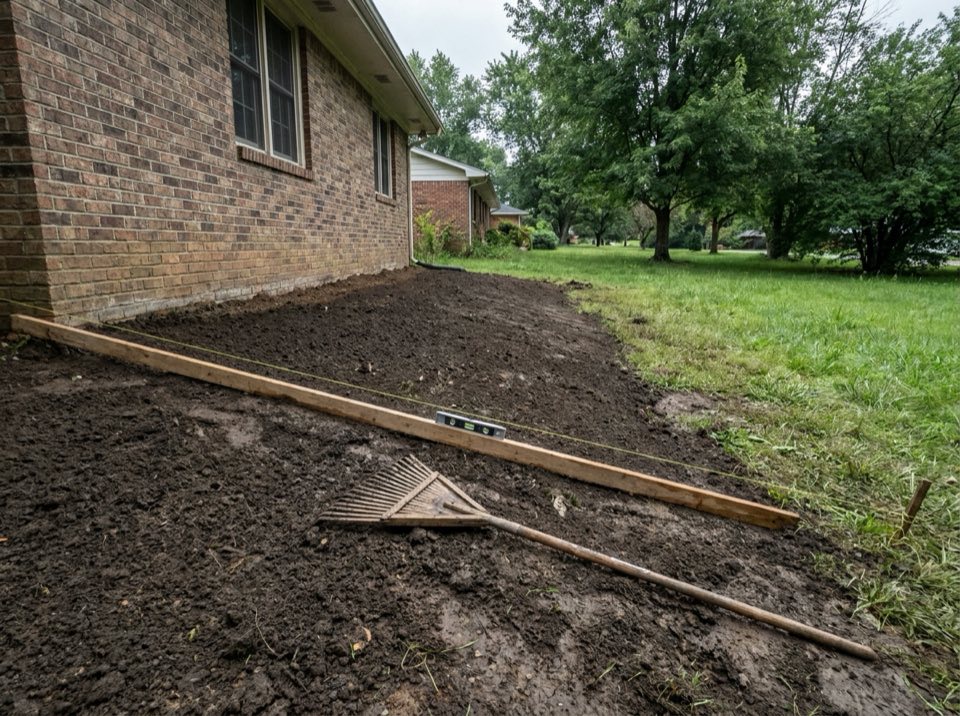
Reshaping the soil so surface water runs away from the foundation instead of back toward it.
Grading
“Downspouts dumping right at the wall”
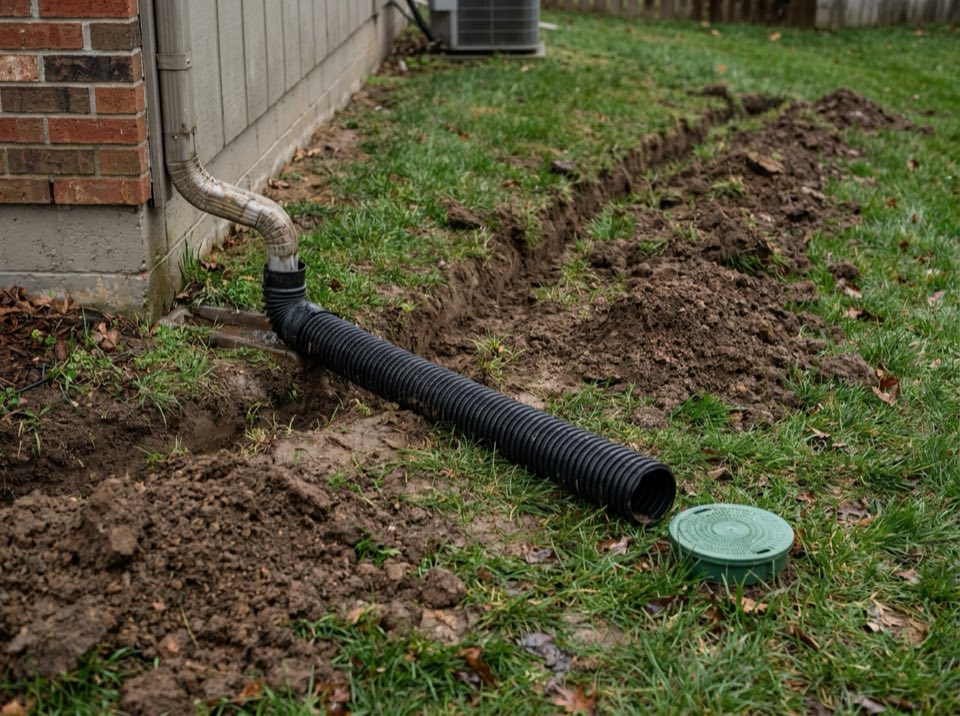
Solid pipe underground from each downspout to daylight or a pop-up emitter well away from the house.
Downspouts
“A low corner that turns into a pond”
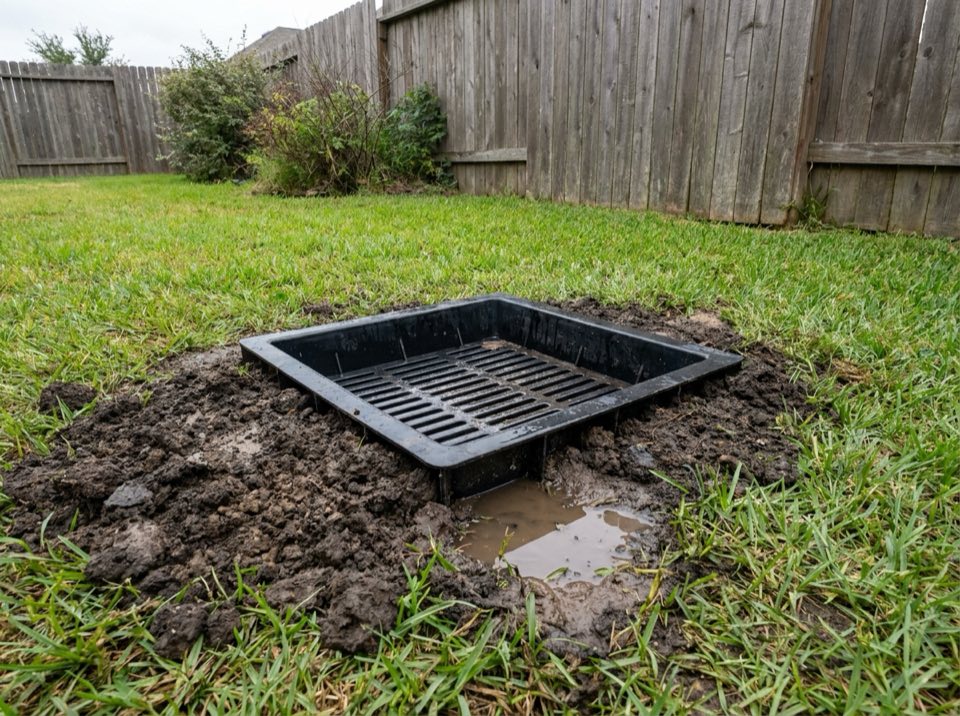
A grated inlet at the low point, piped to an outlet or an underground chamber that lets water soak away slowly.
Catch basins
“Water in the basement after heavy rain”
Water in the basement after rain has a source outside. We trace it, then fix the cause rather than the stain.
Basement leaks
“Water where the basement wall meets the floor”
A drain along the inside edge of the basement floor that collects water before it spreads, with a sump pump to send it outside.
Drain tile
“A basement wall that stays damp from the outside”
Excavate to the footing, seal the wall with a membrane and lay drain pipe at its base.
WaterproofingIt isn’t just the rain. It’s what the rain lands on.
Much of the metro sits on clay-rich subsoil. Water soaks in slowly, so after a storm it stays near the surface and moves sideways, often toward the nearest foundation.
Heavy spring rain arrives fast, more than saturated clay can absorb, so the excess has to run off somewhere.
A basement is a hole in wet ground. Any water held against its walls is looking for a way in.
Grass slows runoff but can’t fix a slope that points at the house.
A few inches that fill up fast in a heavy storm.
Holds water for days. This is where a French drain does its work.
Where water pushes on the bottom of the basement wall, and where drain tile sits.
We don’t quote a drain before we know where the water comes from.
Show us where water collects. Pictures taken during or right after rain help most.
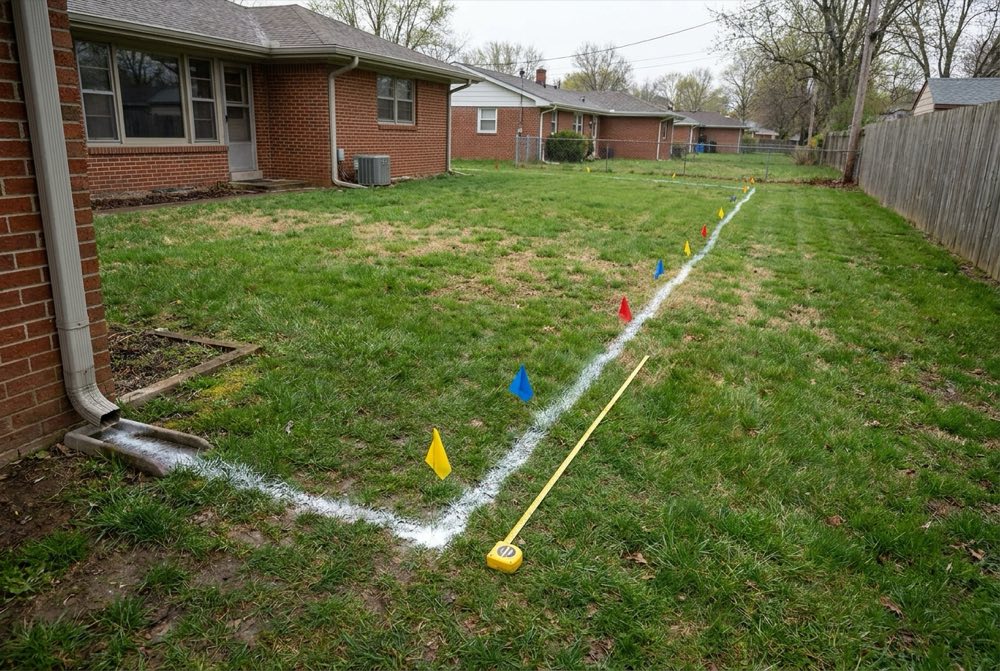
Roof, downspouts, grade and low spots, then the basement, following the path the water takes.
Where the drain runs, where it outlets, and what it costs, before any digging.
Utilities marked first, trench dug, pipe laid, soil and sod put back.
It depends on the yard more than the drain. These are the things that move the price, and the written plan prices each one before any digging.
Johnson County in Kansas, plus Kansas City and eastern Jackson County in Missouri.
If water runs across the surface toward the house, grading and downspout lines often solve it on their own. If the ground stays soggy days after rain, the water is below the surface and a French drain is usually the answer. Many yards need both.
It can if the water is coming from the yard side. If it's coming up where the wall meets the floor, interior drain tile and a sump are usually the fix. The drainage check is how you find out which.
To daylight on a downhill slope, a pop-up emitter in the lawn, a dry well, or a storm connection where the city allows one. It never goes onto a neighbour's property.
There will be a trench. Sod and soil are set aside and put back after the pipe is in. Expect a visible line for a few weeks while it knits back.
Plenty of people do. The parts that go wrong are the fall of the pipe, the filter fabric and the outlet. If you're unsure where the water will end up, a check first can save a second dig.
Tell us where the water shows up and we’ll call back to set a time. The form is at the top of the page, or call:
(816) 857-9277Call, or text a photo of the problem to the same number.
Back to the form